
From Self-Publishing to Steel Fabrication: Week 1 of My Vorpraktikum

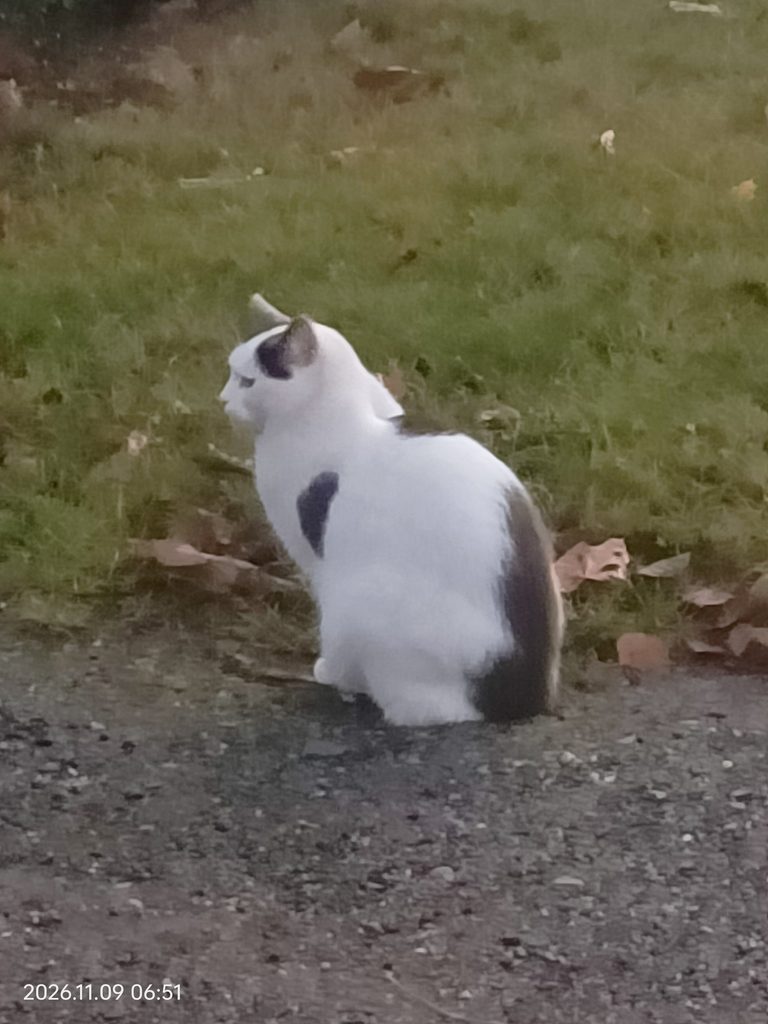
When you are building a lean digital media operation alongside major academic and career milestones, life rarely follows a linear script. Readers following Sentinel Blueprint know that I have been working on my upcoming logistics book—and to keep things completely transparent: I am still not finished with the logistics book just yet. I know. It’s been two weeks even this cat isn’t impressed.
Right now, my primary focus is on the shop floor. I am currently completing my mandatory one-month pre-study technical internship (Vorpraktikum)—which runs through the first week of December—as a prerequisite for my Industrial Engineering (Wirtschaftsingenieurwesen) degree at TU Chemnitz.
Stepping into a commercial trade environment can be intimidating, which is why I am genuinely grateful for the people running this company. From day one, the CEO has been remarkably kind, patient, and supportive, and the entire crew has been open, welcoming, and generous with their workspace. Beyond teaching me the physical trade, the owner has also been remarkably open to answering my business questions—sharing real-world insights on how he started and took over the company, his management style, how he keeps orders profitable (wirtschaftlich), and even how he maintains a clear overview of business expenses using a pie chart. For someone about to study Wirtschaftsingenieurwesen, getting both hands-on workshop training and transparent business mentorship is invaluable.
Here is a breakdown of what Week 1 inside the steel fabrication shop looked like—and how these skills connect to a much bigger engineering goal.
Day 1: A Warm Welcome, Safety Protocols, and First Cuts (Friday, Nov 6)
Walking into a new workshop environment starts with building rapport and locking down safety compliance. After arriving early, meeting a member of the team, and bringing chocolate as a small thank-you, the owner welcomed me warmly. We signed the Praktikum contract, walked through the workshop safety rules together, and he even lent me a spare work jacket so I was properly geared up.
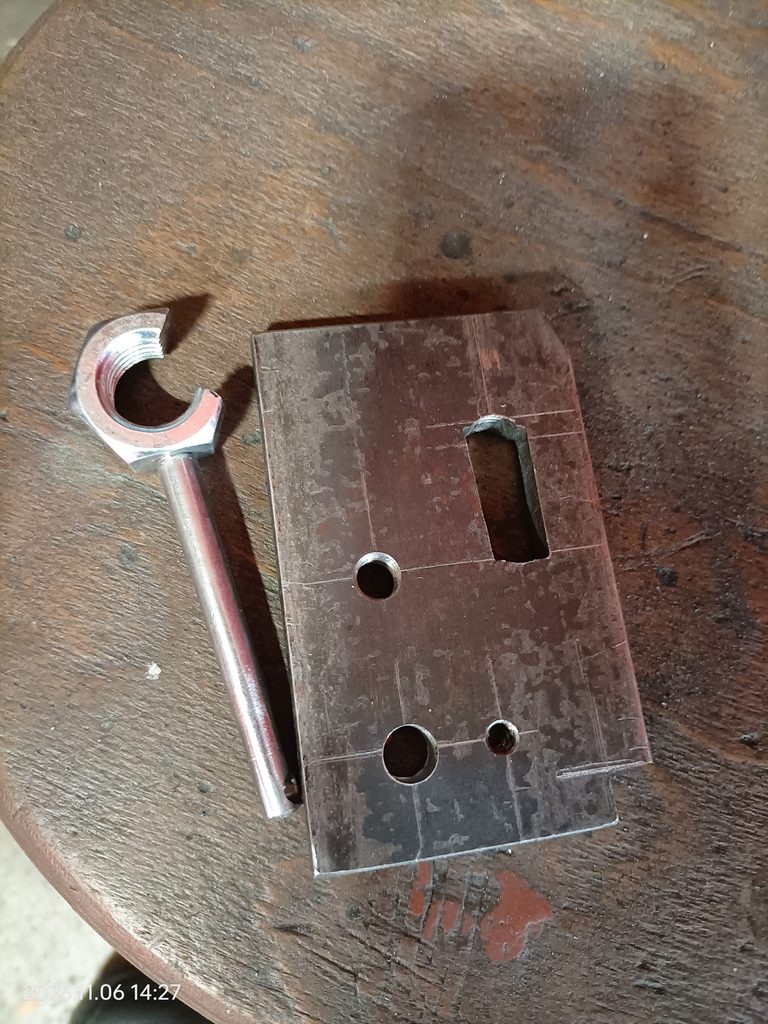
From there, he set me up with my first practical project: fabricating a bottle opener and a drilled metal workpiece. With patient step-by-step guidance, I learned the operational basics of two foundational shop machines:
• Metallbandsäge (Metal Bandsaw): Cutting raw stock down to exact dimensions.
• Ständerbohrmaschine (Drill Press): Drilling clean, accurate holes under controlled feed pressure.
Once I wrapped up both tasks, I got the chance to lend a hand to senior coworkers handling heavier material logistics with a lifter and a forklift (Stapler). My fellow intern (Praktikant), who started before me, had already been allowed to try operating the Stapler—watching the workflow in action made me hope I’ll get a chance to drive it myself before the internship wraps up. Assisting the crew also gave me an upfront look at real fabrication challenges—like how tricky it is to align, secure, and cleanly cut metal grating (Metallgitter) onto a square edge without distortion or jagged overhangs.
Days 2–4: MAG Welding, Shop Safety, and On-Site Installations (Nov 9 – Nov 11)
As the new week kicked off, the team seamlessly brought me into their daily workflow, answering questions and giving me plenty of space for hands-on practice:
• Monday (Nov 9): Hands-on MAG welding (Metall-Aktivgasschweißen) alongside the welders. They walked me through how to set up the machine, ran a quick test bead themselves, and then handed me the torch to practice on scrap steel. While I had done some stick welding six years ago and had a few brief tries on a MAG machine at a club I recently left, it was my very first day operating a professional shop setup.
After checking out my welds, one of the senior crew members joked that I could already replace him on the welding station—a compliment I could hardly believe, and one that gave me a confidence boost—especially after I had started doubting my own skills when a gatekeeper at my previous club showed my early practice weld to other members and convinced them I am not allowed to go solo without him.
I consider it a massive stroke of luck to have the chance to complete my Vorpraktikum here. It helped me regain a part of me that I didn’t realize I lost. It really goes to show that the right environment brings out the best in people. I’ll keep this in mind when I lead my own team and company someday.
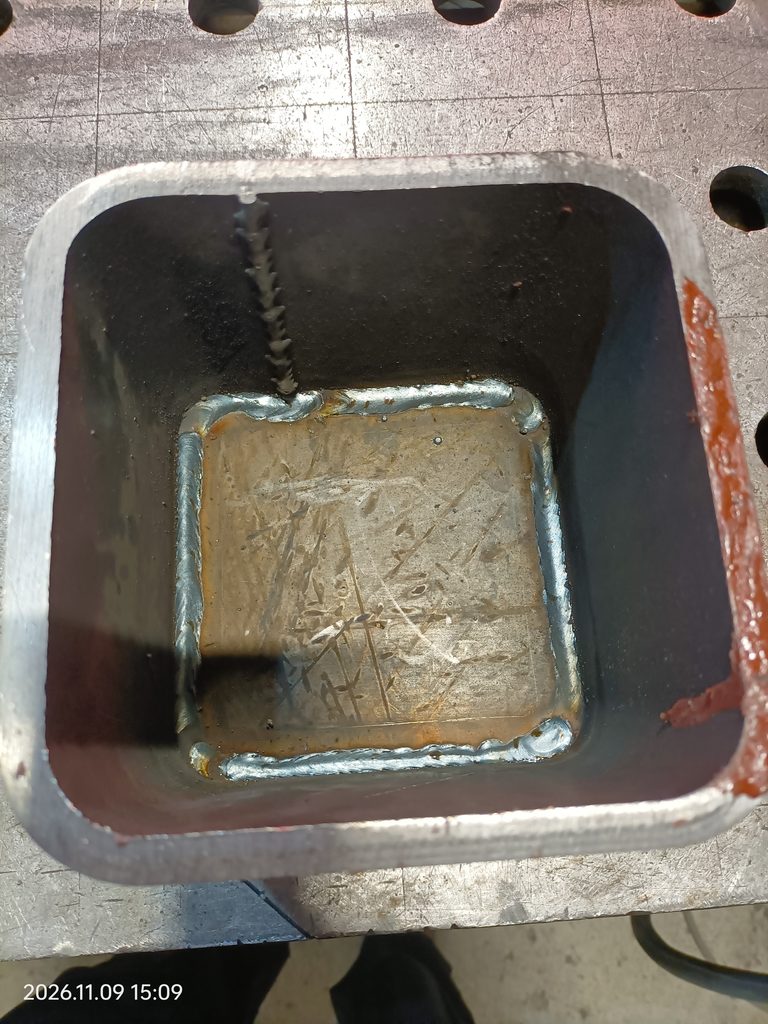
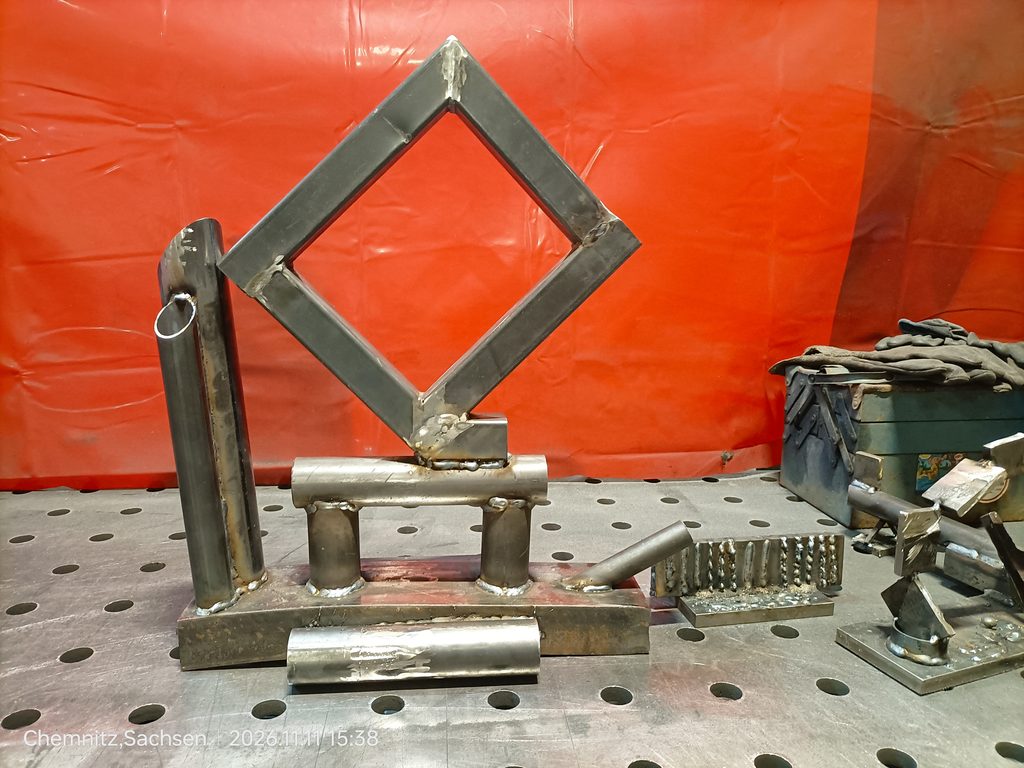
The clean four-sided horizontal fillet weld sealing the bottom base plate inside the square steel tubing (the vertical bead on the upper-left wall was already on the scrap piece).
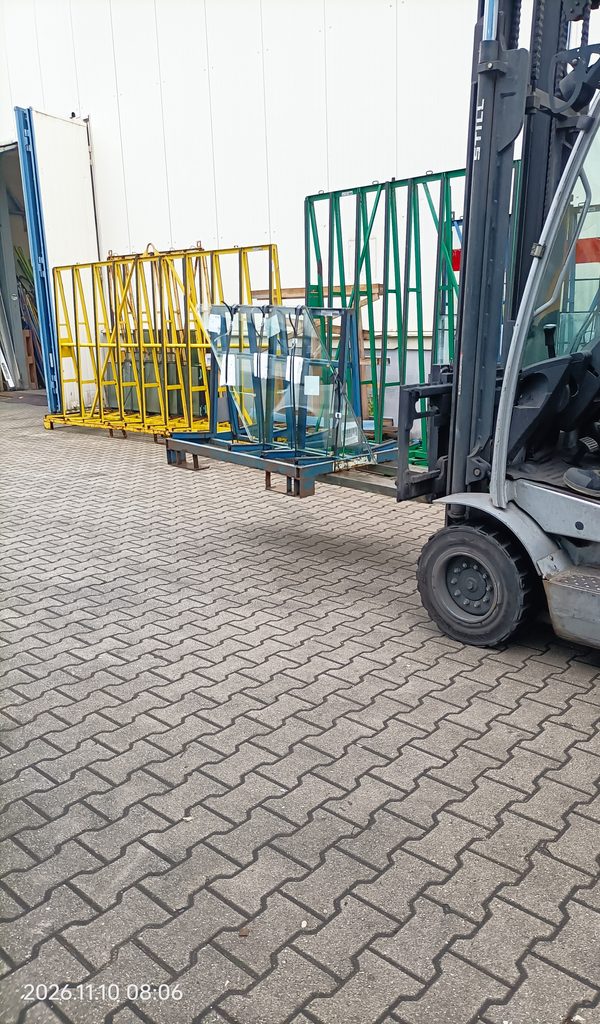
• Tuesday (Nov 10): Field deployment and supply-chain logistics in action. I joined the installation crew on external site runs, starting with a stop at Sachsen Glas to pick up the remaining glass panels needed for the job before heading to the client’s property for a terrace installation. Seeing firsthand how shop fabrication and supplier pickups coordinate for on-site assembly was eye-opening—and the homeowners at the installation site were wonderfully welcoming, even preparing hot drinks and lunch for the crew.
• Wednesday (Nov 11): Back in the shop for dedicated MAG welding practice. Before I struck an arc, a coworker took the time to help me wheel over and position the standby mobile welding fume extractor (Schweißrauchabsaugung) right above the welding table so I could work safely with proper local exhaust ventilation. With the extraction hood dialed in, I spent the session fabricating my “Diamond Trophy” practice piece—combining mitered square tubing, round pipes, and flat steel stock to practice different joint geometries.
Day 5: Precision Machining, Sheet Metal, and Protecting My Learning Curve (Thursday, Nov 12)
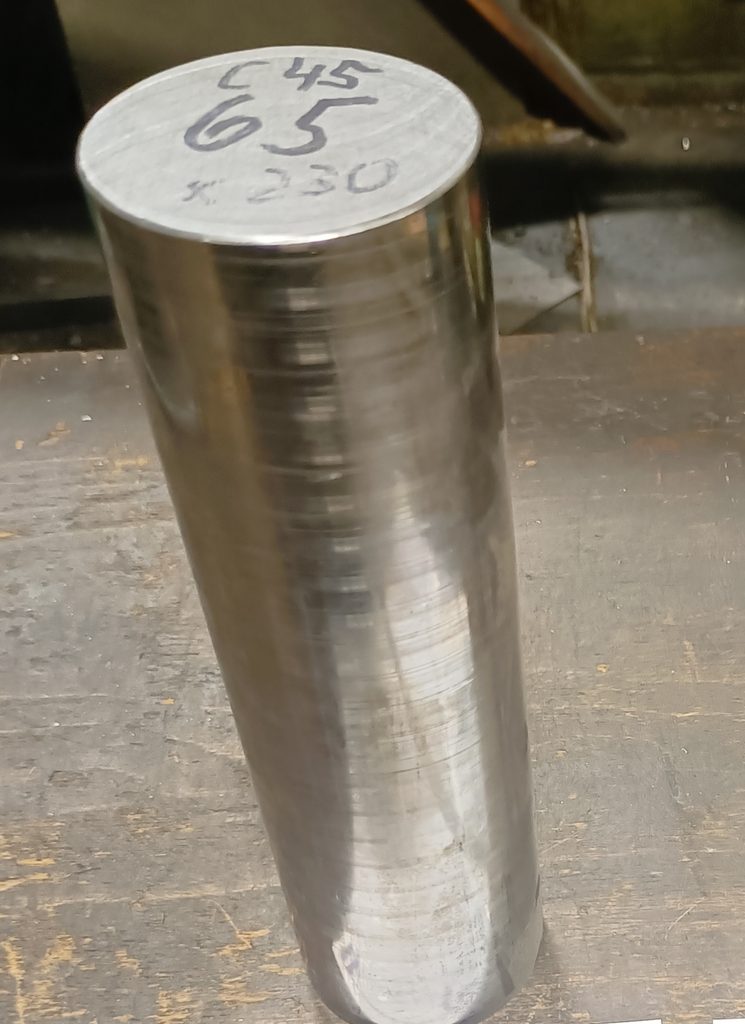
Thursday introduced rotary machining and precision sheet metal work (Blechbearbeitung), again made possible by coworkers who were eager to share their craft. Working on the lathe (Drehbank), a colleague didn’t just walk me through how cylindrical components are turned to tolerance—he trusted me to operate the machine on an actual customer order and showed me how to accurately measure the diameter as we worked.
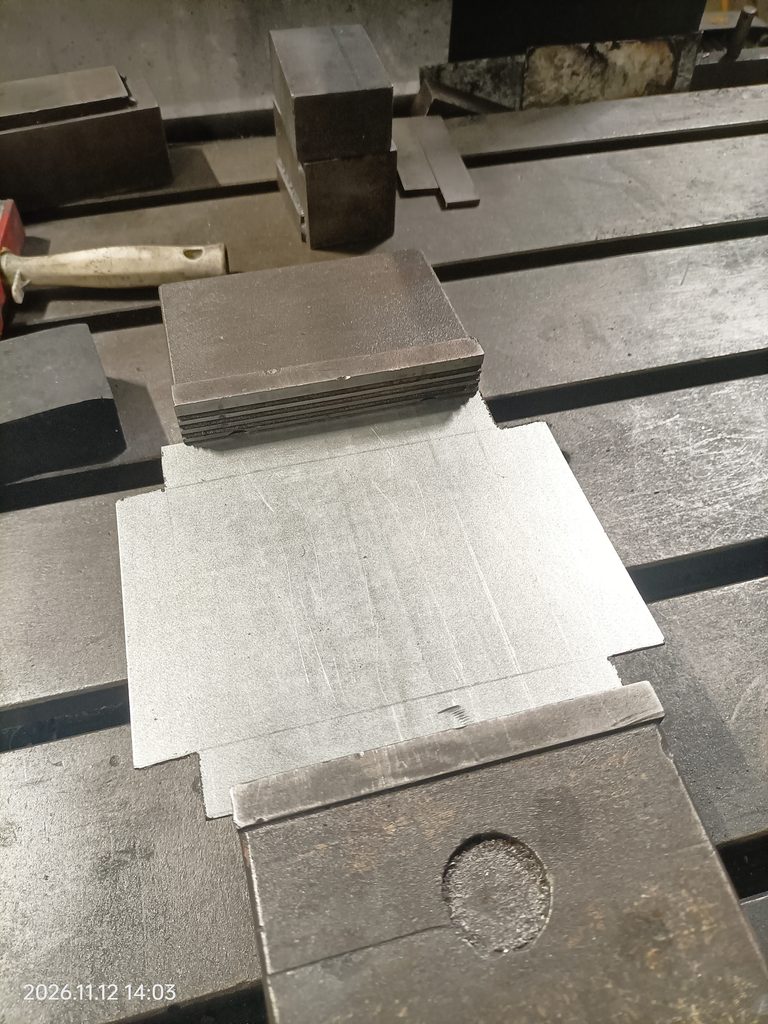
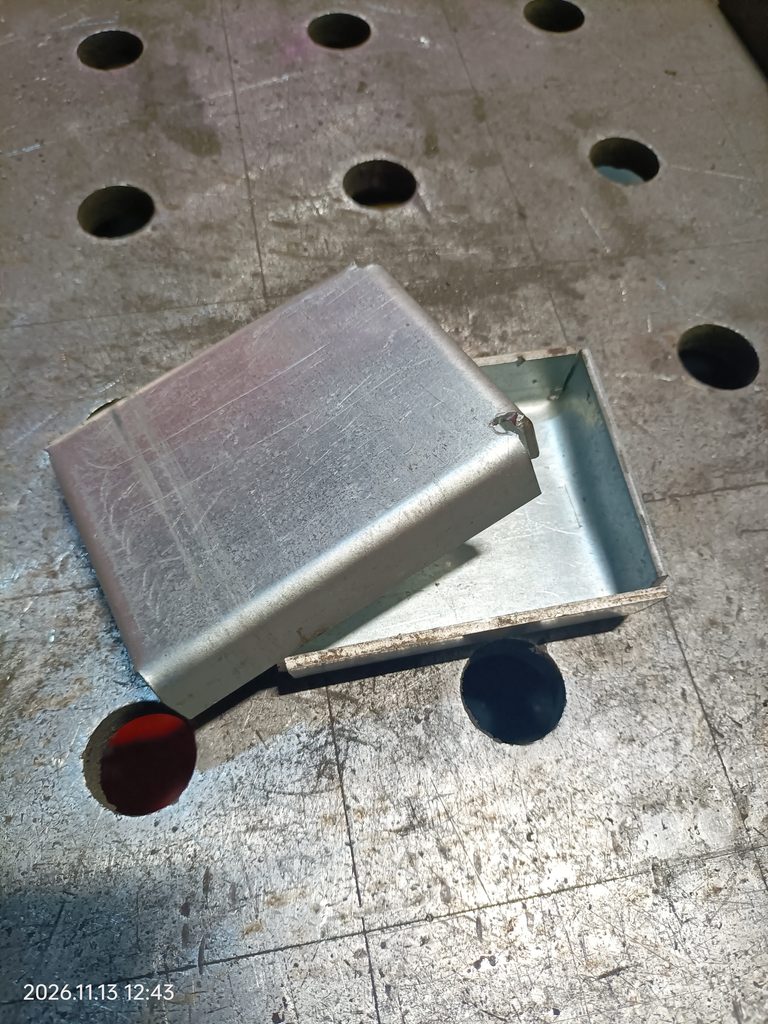
Later in the day, the owner gave me and another intern (Praktikant) a practical assignment: fabricating a custom box from a flat piece of galvanized sheet metal (Blechkiste). To get started, we worked with traditional layout tools and heavy forming equipment:
• Layout & Measurement: Gliedermaßstab (folding rule) and Stahllineal (steel ruler).
• Cutting & Forming: Tafelschere (guillotine shear) to cut flat sheets and Abkantbank (press brake) to fold crisp, accurate bends.
While cutting the blank on the guillotine shear (Tafelschere), I used the cutter incorrectly and trimmed off too much material—leaving me without enough sheet metal to hit the full dimensions, which would come back to bite me when folding the box the next day.
Beyond the technical machinery, Thursday also taught me an essential soft skill for a woman working in a male-dominated environment: how to stand my ground to keep things strictly professional and protect my own learning curve.
While cleaning up the fume extractor, a senior coworker jokingly remarked that I was welcome to come clean his house next. Even though it was meant in humor, a lightbulb went off: if I’m not careful, there is a real danger of being shrunk into a “cleaning and helper” role—and missing out on the core machining and fabrication skills I came here to master.
Combined with men’s natural tendency to step in and take over heavy or tricky tasks to make things easier, it could easily turn an internship into a show instead of actual learning by doing. Learning how to politely set boundaries, decline unnecessary help, and stay focused on the machines turned out to be one of the most valuable lessons of the week.
Day 6: Quality Control, Engineering Accountability, and Practicing for Certification (Friday, Nov 13)
Friday put that mindset straight into practice. Because I had cut the sheet too short on Thursday, my first sheet metal box came out uneven. A coworker kindly reassured me that his first attempt had looked similar and offered to have another teammate help me fix it. True to the boundary I set the day before, I was grateful for the offer but insisted on doing the work myself—because relying on others to bail you out prevents real skill acquisition, and more importantly, nobody is going to buy a crooked box.
When I shared this with the CEO, he was completely understanding and encouraging. He supported my decision to scrap the flawed attempt, grab fresh material, and start from scratch.
While carefully laying out and measuring the dimensions on the new sheet, a passage from a thermodynamics textbook I read back in college suddenly came to mind: mistakes in planning—especially in measurement and cutting—can lead to deadly failures in the real world, like buildings or bridges collapsing. Seeing how a single cutting mistake on Thursday ruined the final geometry of a simple sheet metal box made that textbook warning hit home right there at the workbench. Engineers cannot afford to treat fundamentals casually; they truly need to master foundational technical skills and precision from the ground up. Taking my time with every millimeter, cut, and bend, I finished the new box before lunch and presented it to the owner after.
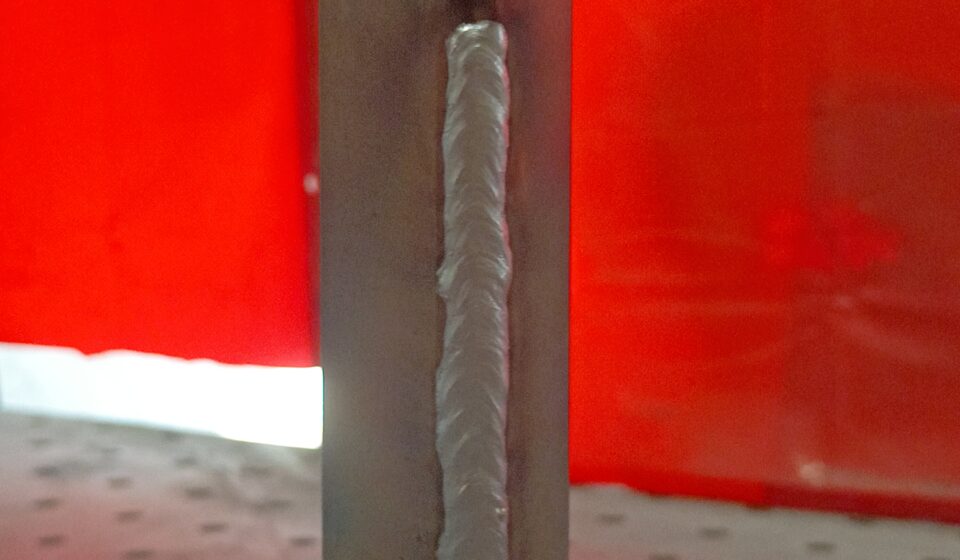
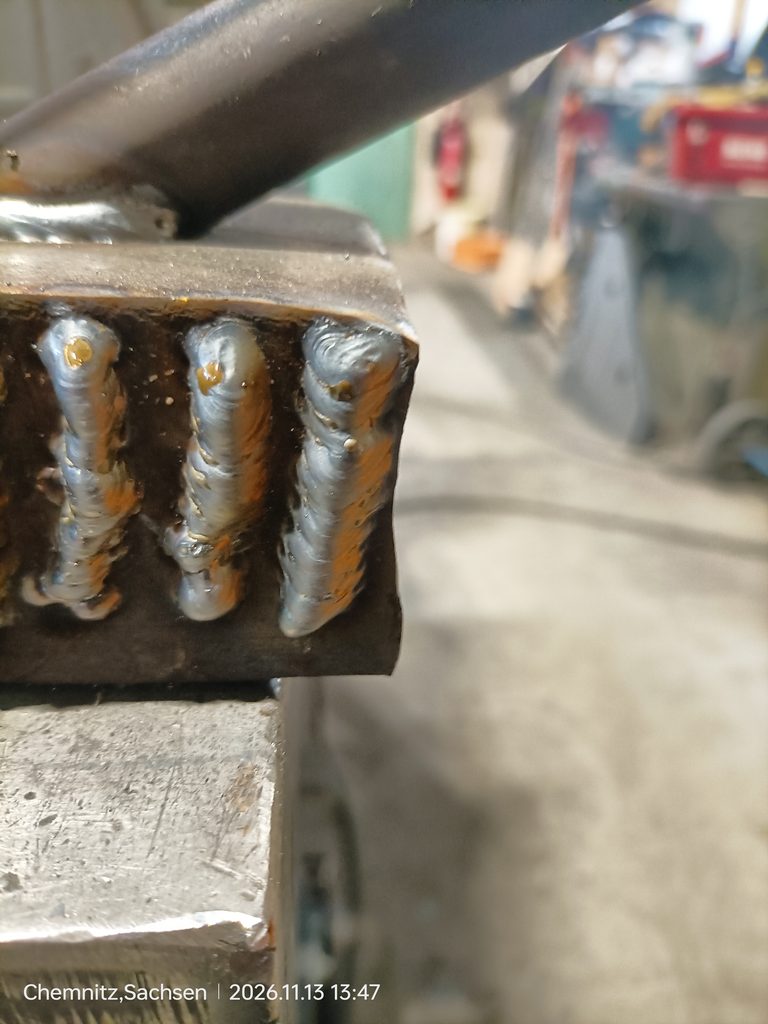
With the box approved, I spent the afternoon practicing vertical-up (PF-position) MAG welding. Even though the team noted that achieving clean vertical welds on that specific machine setup wasn’t really possible, they gave me the space to experiment and dial in the settings. My vertical-up beads are still very much an early work in progress, fighting gravity to keep the puddle from sagging, though you can already see clearer consistency from the first pass to the third.
That vertical-up practice ties directly into a long-term engineering milestone I am working toward. My goal is to build enough skill to pass two formal welding certifications (per ISO 9606-1):
• TIG Stainless Steel Pipe (141 – T – BW – FM5 – PF): Vertical-up fixed butt welds on 1.4301 stainless steel tubing using back purging.
• MAG Mild Steel Plate (135 – P – BW – FM1 – PF): Vertical-up butt welds on beveled S235JR structural steel plate.
Earning these certifications is a critical requirement so that I can personally fabricate a physical prototype intended for hospital logistics. In healthcare environments, structural integrity, clean stainless steel welds, and regulatory compliance aren’t optional—they are essential.
Looking Ahead: Weeks 2–4 and the Logistics Book
I feel very fortunate to be completing my Vorpraktikum in a place where craftsmanship is paired with genuine kindness, business transparency, and respect. Stepping onto the shop floor has already been a solid reminder that whether you are measuring and cutting sheet metal down to the millimeter, protecting your learning curve, preparing for vertical-up welding exams, keeping customer orders wirtschaftlich, or structuring a manuscript, patience and getting the foundation right are always worth the extra effort.
With three more weeks of metalworking ahead of me until the first week of December, my weekday energy goes straight into making the most of this opportunity. Because of that, the logistics book remains a work in progress, and I truly appreciate everyone’s patience as I balance workshop hours with putting the finishing touches on the manuscript. For the meantime, feel free to explore Resilient Kindness: How to Stay Human in an Increasingly Hostile World available in both English and German.
Stay tuned for updates from the next few weeks on the shop floor—and if you haven’t already, subscribe to the newsletter so you don’t miss future posts or the book launch announcement.